To deeply integrate social responsibility into the university’s education, research, and campus engagement, Duke Kunshan University (DKU), in collaboration with the DKU Foundation, launched a university-wide initiative—the DKU Empower program. Over the past three years, the DKU Innovation and Entrepreneurship Initiative (DKU InE), in partnership with the DKU Foundation, has been carrying out a series of impactful projects under the DKU Empower program, including student service-learning projects execution, funding for internships at United Nations agencies, environmental research and practices, and community-engaged learning. With generous support and enthusiastic participation, the Empower program is evolving into a highly interactive campus platform for public welfare, serving as a bridge between educational practice and societal needs. It encourages students and faculty to engage in public welfare, fostering personal growth and societal contributions through exploration and action.
In the 2024–2025 academic year, DKU InE, as a key driver of this mission, implemented several featured projects through the University-Corporate Collaboration Innovation Lab (U-Corp):
1. U-Corp@Women Friendly Space: Empowering Rural Women: Innovative Practices in Building Women-Friendly Shared Spaces
The project aims to address women’s needs and experiences by creating a safe, inclusive, comfortable, and accessible shared space that enhances their physical and mental well-being, promotes gender equality, and enriches their spiritual and cultural lives.
2.U-Corp@PEER: Project E: Exploring Innovative Paths to Enhance County-Level High School Students’ Adaptation to Higher Education
This project aims to help high school students in county-level areas better adapt to university life by simulating the college experience and providing guidance on university application choices.
3. DKU Youngster: An Early U-Corp Incubated Charity Initiative
As one of the early on-campus public welfare teams incubated by the U-Corp program, Youngster (后浪公益) brings hope for English learning to students in rural primary schools by offering integrated online-and-offline public welfare courses and activities, planting the seeds of language learning in their hearts.
In the cycle of “knowledge” and “service,” every participant grows into a change-maker with both professional expertise and social consciousness.
U-Corp@Women Friendly
Practice in Building Women-Friendly Shared Spaces
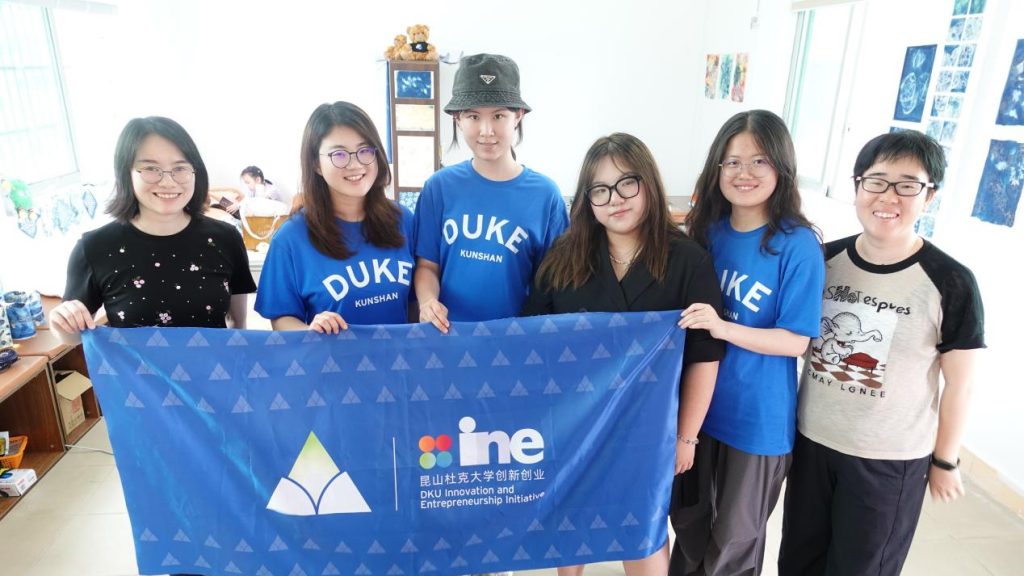
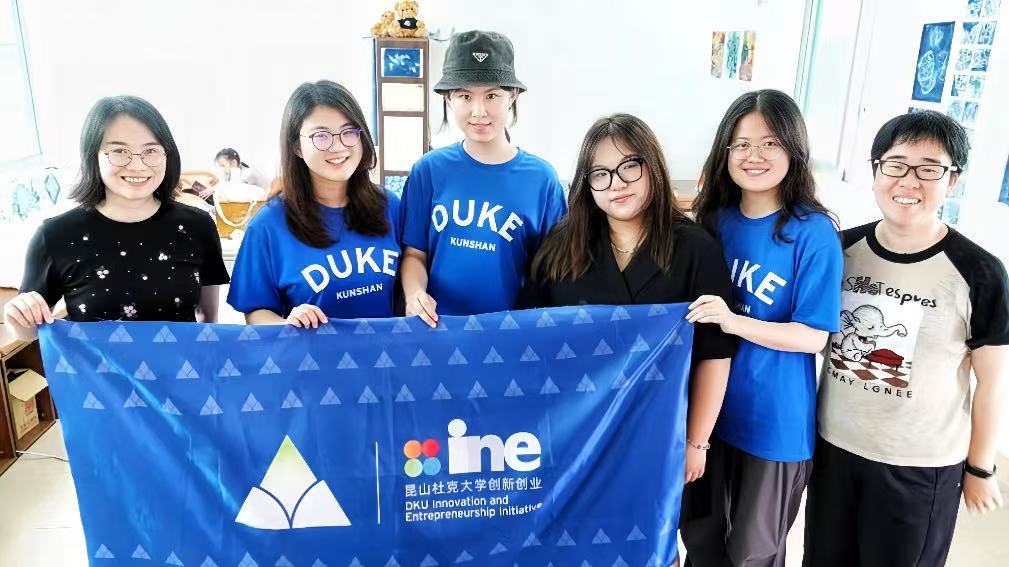
(From left: GRWDF Ying Luo, Harper Chen, Yining Wang, Mingxuan Liu, Jianing Wang, GRWDF Weiqun Yu)
This project addresses the long-neglected needs of rural women in mental health, social connections, and public participation by establishing a safe, inclusive, and sustainable female-friendly space in Qianjing Village, Shaoguan, Guangdong. The team adopted a participatory action research model, combining “research—co-creation—practice” to emphasize demand identification, community collaboration, and implementation.
Over two months, the team conducted systematic research on rural women’s challenges and global case studies of women’s support programs. Collaborating with the Guangdong Rural Women Development Foundation, they designed the space based on their findings. On-site, the team engaged with local women to co-build the space and test its feasibility through activities. The approach focused on translating abstract gender issues into tangible, locally relevant practices, gradually shifting from “passive observation” to “collaborative participation” and finally to “empowerment.”
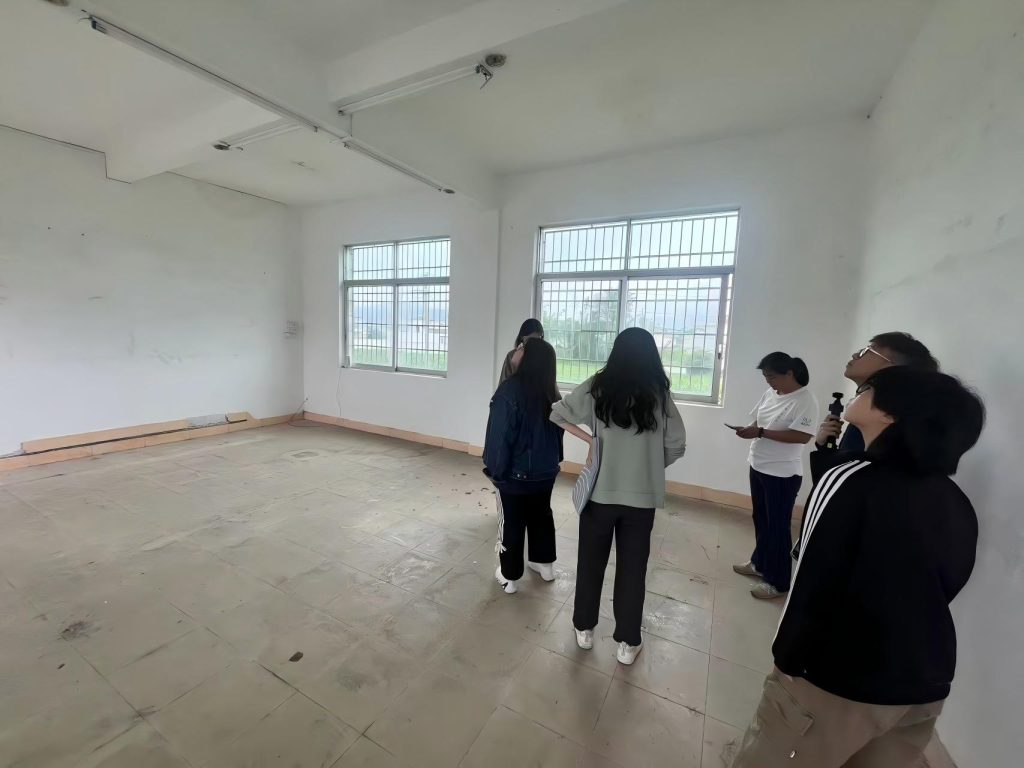
To overcome challenges like women’s difficulty in recognizing their own struggles, the team employed subtle awakening techniques. For example, they designed question cards with prompts such as, “When was the last time you made a decision for yourself?” or “Have you ever felt exhausted but afraid to speak up?” These questions were presented gently, allowing reflection without pressure. The team localized their communication, replacing jargon with relatable phrases like “What do you do when your back aches?” instead of “bodily autonomy.”
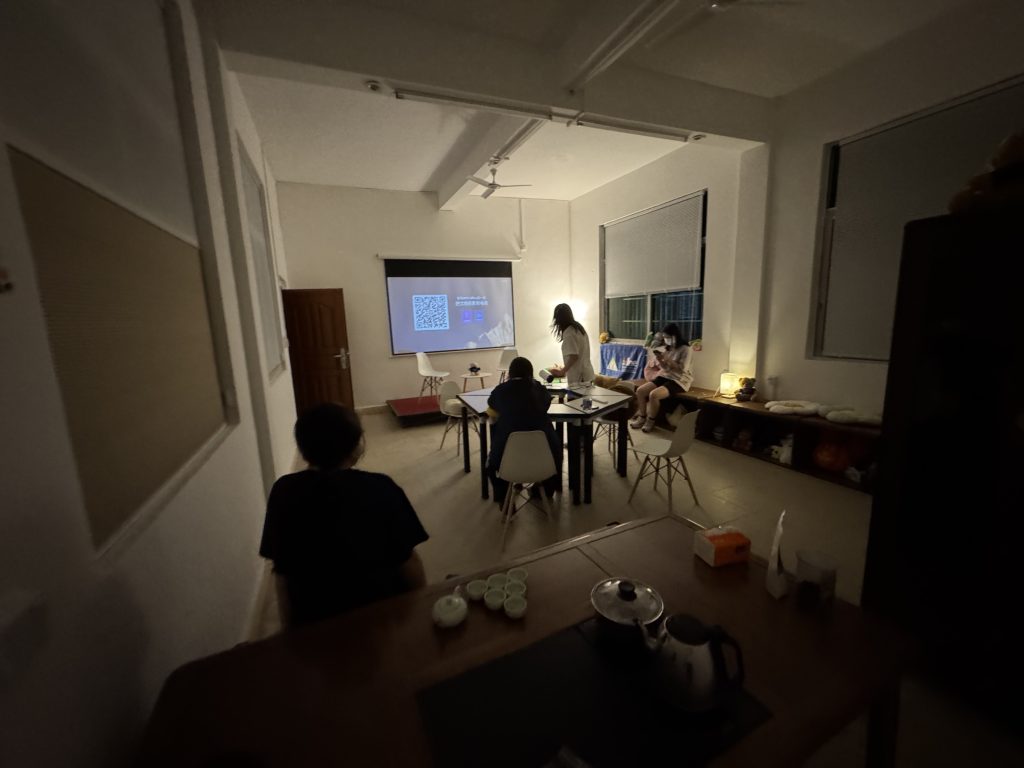
The space prioritized practicality, such as removing hard-to-open cabinet doors, and used blue as the main color—a hue associated with calmness and trust in local culture.
These adjustments underscored a key lesson: true empowerment is not about imposing change but creating environments where change can naturally occur.
U-Corp@PEER
Exploring Innovative Paths to Enhance County-Level High School Students' Adaptation to Higher Education
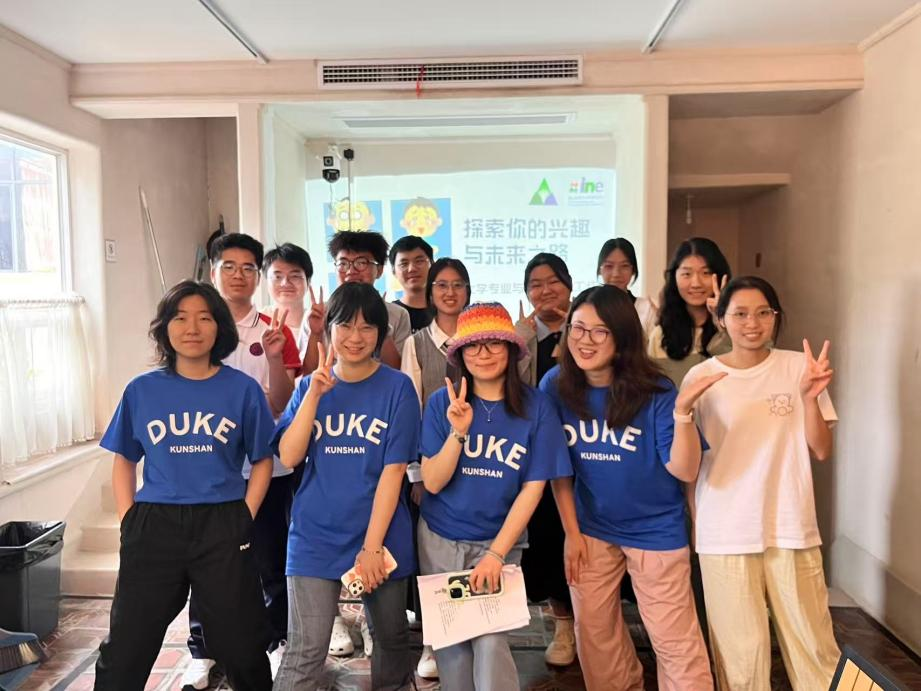
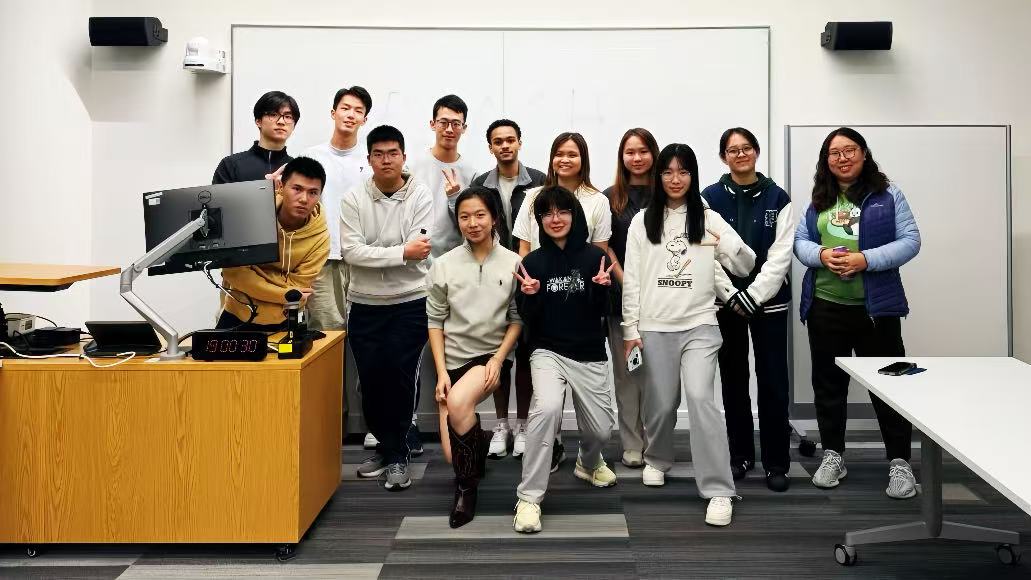
(Front row, from left: Yutian Wang, Yiya Pang, Yixin Gu, Harper Chen)
Building on last year’s U-Corp@PEER projects’ success, this year’s Project E Program leveraged AI to help county high school students transition to university life. The project, centered on “University Experience” and “University Spirit,” used inquiry-based learning (IBL) and problem-based learning (PBL) methods. Activities included self-exploration questionnaires, group research tasks, and AI-assisted career exploration exercises.
Over seven months, the team developed comprehensive workshop materials tailored to diverse learning styles. They trained “Big E” volunteers to facilitate discussions and guide students in using AI tools responsibly. During the five-day workshop, students engaged in case analyses and career exploration, gaining deeper self-awareness and interest in future academic paths.

Through this project, county high school students gained a clearer awareness of how AI can shape learning, career exploration, and personal growth. They learned to identify their own interests and strengths with AI, and to use these tools critically and responsibly. Post-project interviews showed clear changes—students became more proactive about their futures and more willing to apply AI to real-life challenges. Working closely with peers and volunteers also strengthened their sense of community.
By empowering students to design their own questions and explore multiple disciplines, the project nudged schools toward more student-centered, inquiry-driven learning. While aimed at individuals, it offered valuable insights for policy—such as integrating AI into curricula and fostering interdisciplinary skills.

The team envisions scaling this model from small PEER–DKU collaborations to larger community programs, amplifying social impact, inspiring alumni to give back, and building lasting cultural networks.
U-Corp@Youngsters
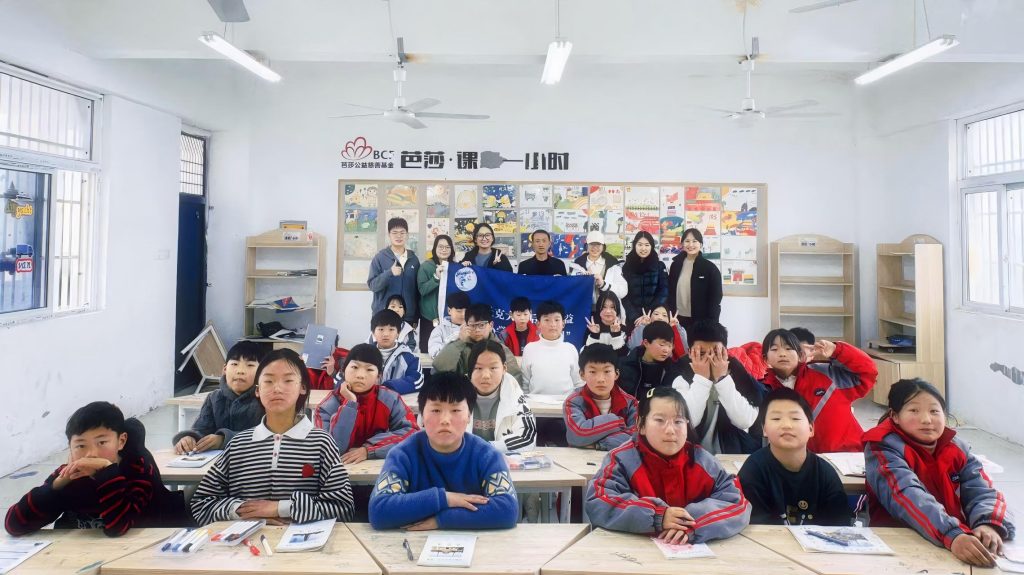
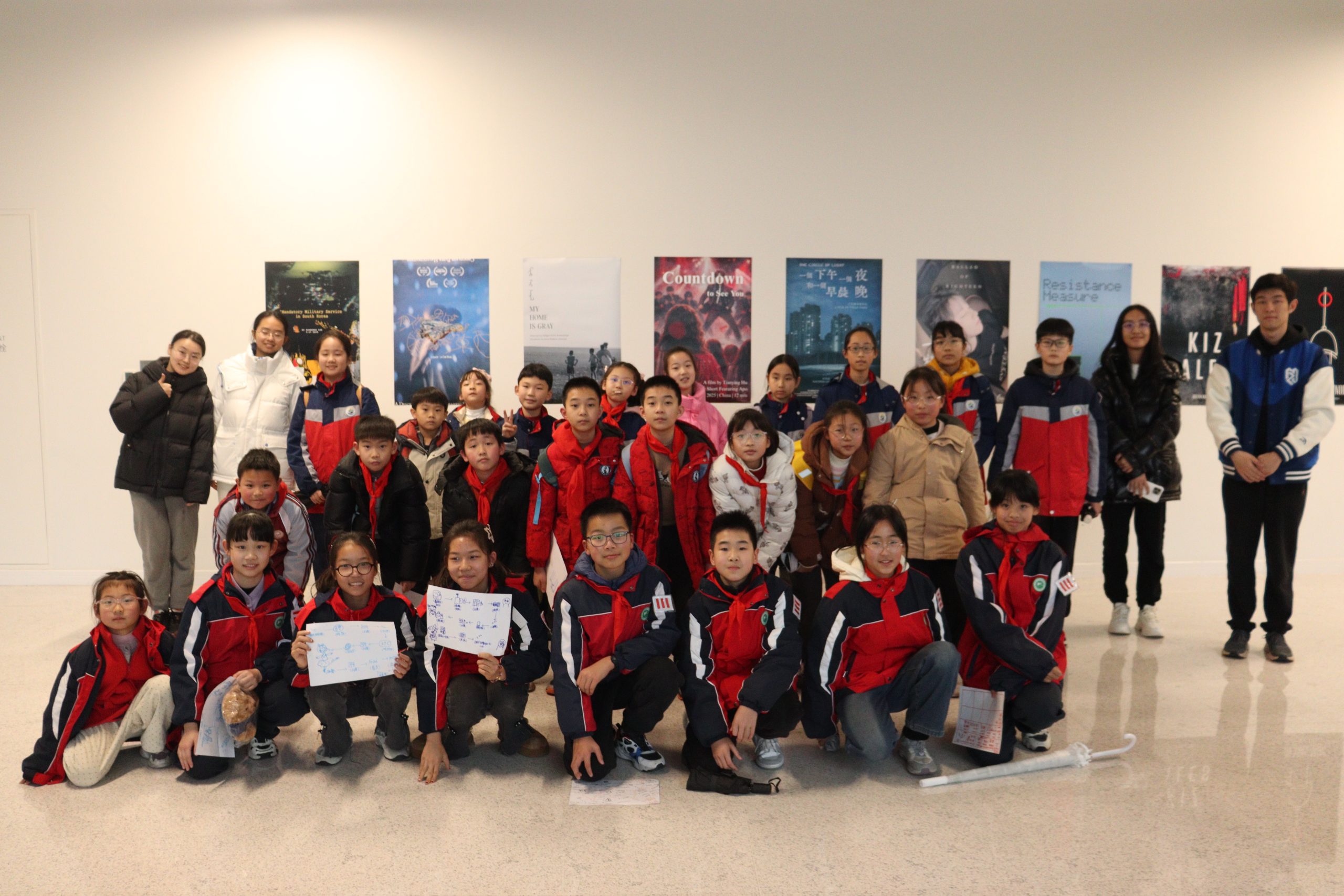
(Back row, from left: Zhengyue Guo, Yixin Gu, Zihan Ma, Xu Ying Elementary School’s English Teacher Miss Wang, Yufei Zhang, Yufei Yao, Xinyi Liu)
Youngsters, a student-founded charity at DKU, has worked with schools such as Xuying Primary in Anhui, CISK, and Kezhou No. 2 High School in Xinjiang to run teaching support programs, letter exchanges, and other initiatives. Guided by the values of local awareness, humanistic care, and sustainable growth, the group addresses the needs of specific communities to help bridge gaps in educational resources and promote equity. Members approach issues from the children’s perspective, building empathy, social responsibility, and a strong sense of service, while fostering cross-disciplinary collaboration and knowledge exchange.
In 2023, Youngsters launched a long-term partnership with Xuying Primary called the Dream-Start Initiative. Together with partner schools, they organized material drives and donation campaigns that resonated deeply with both students and teachers. The project specifically targeted the school’s shortage of English education resources and low student engagement in language learning. It introduced an online rural English program designed to make lessons more dynamic and relevant.
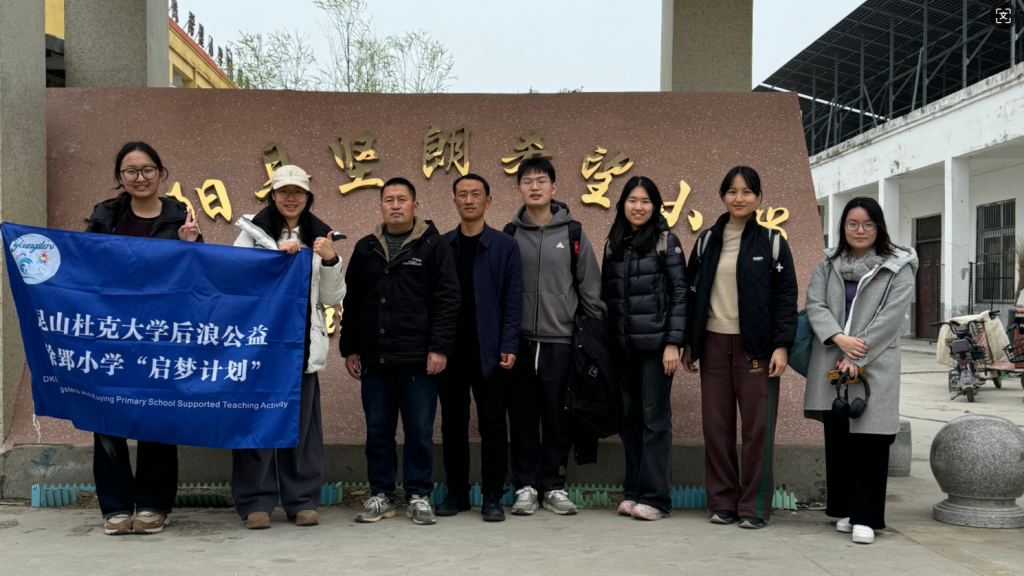
To evaluate and improve the online teaching model, Youngsters ran on-site programs in the summers of 2024 and 2025, attracting 12 DKU students from diverse majors to Xuying Primary for activities ranging from values-based discussions to art therapy and creative English teaching. Lessons combined language practice, songs, and storybooks, turning classrooms into lively, immersive spaces that helped children overcome learning barriers with ease.
Breaking free from traditional teaching frameworks, members worked closely with local teachers to gauge students’ learning range and designed a blended method of targeted review and game-based reinforcement. This immersive approach moved beyond grammar-translation drills, boosting students’ confidence, fostering independent learning habits, and quietly reshaping the school’s language-learning culture.
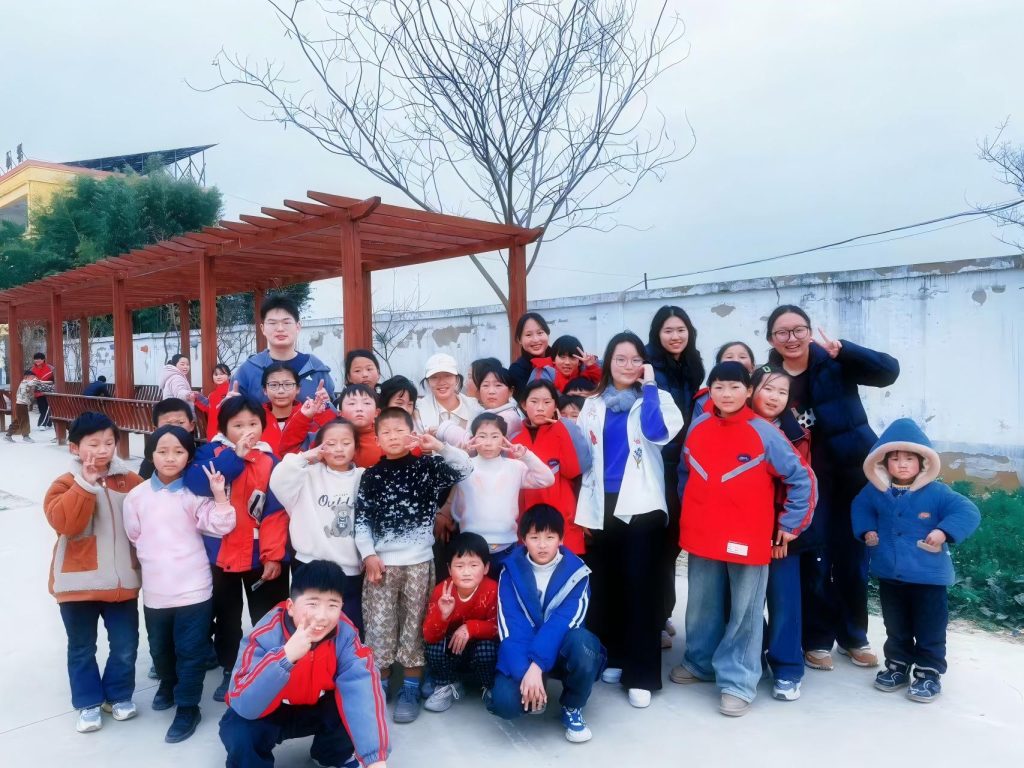
The impact was mutual—Xuying gained fresh energy for its teaching model, and Youngsters members were inspired to seek more creative, place-based teaching opportunities. They hope to extend the Dream-Start Initiative to other underserved areas, bringing in more volunteers and partners and experimenting with interdisciplinary methods like art and drama to make English learning more natural and engaging. Plans include more frequent in-person interactions, such as short play performances and themed exchange sessions, alongside sustained attention to students’ psychological growth and overall development.
The organization believes that with long-term, caring companionship and guidance, every child can discover their own learning rhythm and move forward on their journey of growth with greater confidence and determination.